Home
Real Electoral Reforms
- Details
- Written by: Jessica Garland, Director of Policy and Research, Electoral Reform Society
- Category: Zimbabwe
- Hits: 1191
A Zimbabwe Centric Introduction
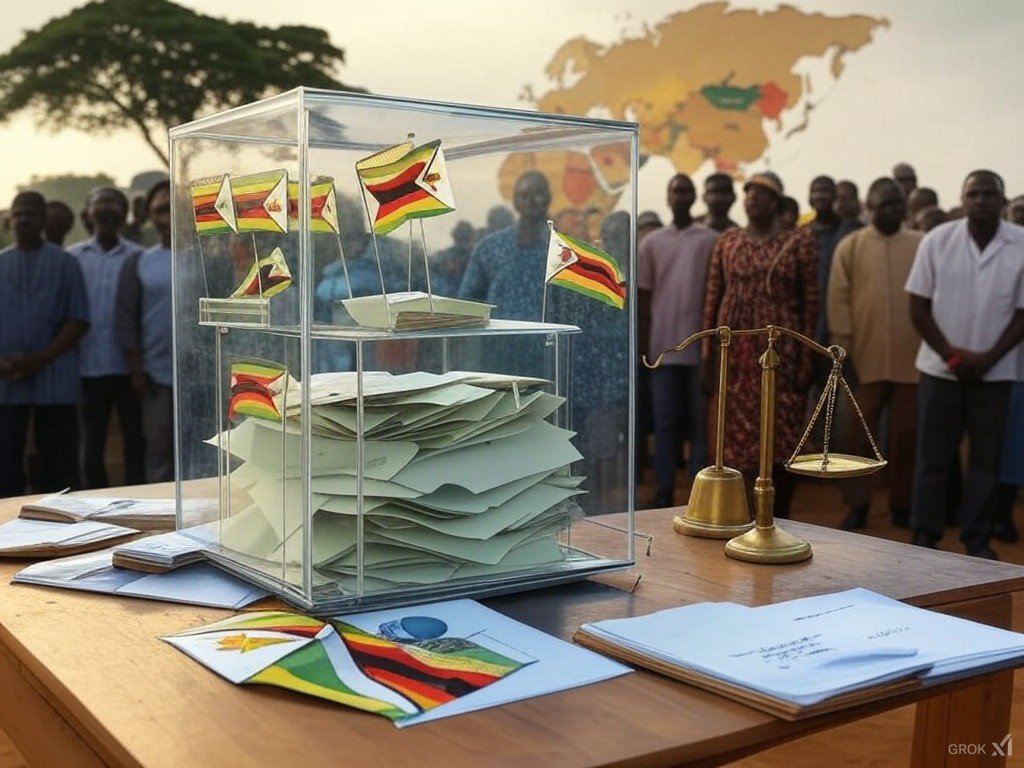
Just listen to what the Electoral Reform Society in the UK demands for their voters - then compare their demands to the vote rigging & disenfranchisement of ZEC and the Zanu PF charlatans. It's not so dissimilar. Big Money influence, Too much Influence by a small group of individuals, and a lack of Transparency!
But ultimately a LACK of any of the Independent (and honest) Vital Institutions for a Democratic Republic.
All too familiar within the context of the Zimbabwean Voting debacle - let alone a Diaspora Vote! It's another "read this and weep (for the real Zimbabwe)" - Again
This is how IT SHOULD be - in Zimbabwe, we are still a million miles from a democratic government - see our other articles for details LINK HERE - Is Zimbabwe a Democracy? and Electoral Reforms are Vital (by Charles Kanyimo) and More The Illusion of Democracy (in Zimbabwe) - an AI Study
Instead in Zimbabwe, the POLITBURO runs the ship, with a {mainly} impotent "Parliament" in name only.
Introduction written by John Burke, ZHRO
Article belowis a reprint with web source links by Jessica Garland, Director of Policy and Research; Electoral Reform UK
"Earlier this month the Electoral Commission heads appeared before a House of Commons select committee with stark warnings about the dangers of failing to address the problems with political finance. Commenting on the existing rules EC Chair John Pullinger said that the system has “a series of weaknesses that do need to be addressed now, if we are not to face some even more damaging consequences for public trust in the system.”"
It’s time to tackle big money in politics
At the Electoral Reform Society, we have long argued that big money is a problem for politics and the current political finance rules are in desperate need of updating.
We agree with the Electoral Commission’s call for reform, particularly in three key areas:
- Preventing foreign profits from influencing UK politics – companies shouldn’t be able to donate money not made in the UK.
- Closing donation loopholes – increasing transparency, especially around donations from unincorporated associations
- Introducing ‘know your donor’ checks – so parties properly screen who’s funding them.
But it shouldn’t stop there, it’s important that we prevent impermissible donations from overseas and guard against foreign influence, but we also need to address the impact of legal but potentially damaging, large scale donations.
A handful of donors are holding too much power
Party funding remains dominated by the big spenders – in the two decades between 2001 and 2021, a fifth of all major political came from just 10 individuals. That’s not healthy for our democracy – so few voices shouldn’t carry that much power.
That is why it is so encouraging to see this issue raised in parliament last week with a new Private Member’s Bill tabled on political donations. This bill, put forward by the MP for Stratford-Upon-Avon, Manuela Perteghella, seeks to place a cap on political donations. Introducing the bill they said, “Introducing a cap on political donations is not about limiting participation; it is about making sure that every vote, every voice and every citizen matters equally in our political system.”
We couldn’t agree more. A donations cap is a crucial tool in ensuring our politics cannot be bought by the highest bidder.
Voters want action
Our research shows that voters are deeply concerned about the impact of money in politics. In fact, big money is the top electoral integrity concern among the public. And it’s easy to see why – Electoral Commissions data reveals that confidence in financial transparency has been in long-term, steady decline. Last year, only 15% of people agreed that political spending and funding is transparent.
When people believe that money can buy influence, it damages trust in our democratic institutions. And right now, that trust is already running low.
It’s time to fix the system. We need bold reforms to political finance – because democracy should work for everyone, not just the wealthiest few.
AI Seeks Solutions to Zimbabwe
- Details
- Written by: John Burke
- Category: Corruption News
- Hits: 889
 The international community has responded to Zimbabwe's human rights abuses through various measures and actions:
1. Sanctions and Targeted Measures: The European Union, United Kingdom, and United States have imposed targeted sanctions on individuals and entities responsible for human rights violations in Zimbabwe[3]. These sanctions aim to pressure the government to improve its human rights record.
2. Diplomatic Pressure: International bodies and governments have consistently called on Zimbabwe to address human rights concerns. For instance, in 2021, the EU, UK, and US called for investigations into the abduction and torture of opposition members[2].
3. UN Special Procedures: United Nations special rapporteurs have expressed concerns about Zimbabwe's human rights situation. In December 2021, four UN special rapporteurs jointly commented on the potential negative impacts of Zimbabwe's Private Voluntary Organizations Amendment Bill on civil and political rights[3].
4. Human Rights Monitoring: Various international organizations, including Human Rights Watch and Amnesty International, regularly document and report on human rights abuses in Zimbabwe[2][3].
5. Calls for Reform: The international community has repeatedly urged Zimbabwe to implement political reforms, restore the rule of law, and respect fundamental freedoms[1][3].
6. Commonwealth Membership Considerations: Zimbabwe's potential return to the Commonwealth has been scrutinized due to its human rights record, with arguments that the country does not meet the required standards for readmission[4].
7. Advocacy for Investigations: There have been calls for swift, thorough, and credible investigations into specific incidents of human rights violations, such as the abduction and torture of opposition members[2].
8. Criticism of COVID-19 Response: The UN High Commissioner for Human Rights expressed concern about allegations that Zimbabwean authorities may be using the COVID-19 pandemic as a pretext to suppress freedoms[2].
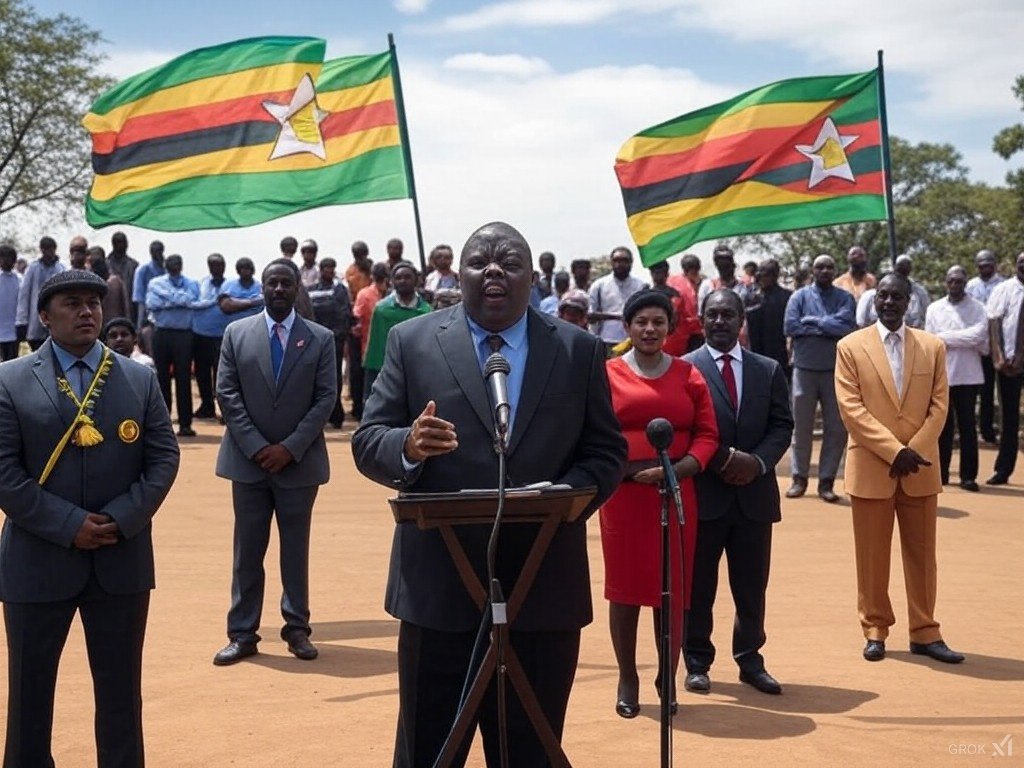 Despite these responses, some international actors, such as the African Union chairperson and a UN special rapporteur, have called for the lifting of sanctions, claiming they negatively impact living conditions in Zimbabwe[3]. This highlights the complex and sometimes conflicting approaches within the international community in addressing Zimbabwe's human rights situation.
Citations:
- [1] https://www.ohchr.org/en/press-releases/2009/10/council-hears-concerns-about-situation-zimbabwe-it-holds-related-debate
- [2] https://www.hrw.org/world-report/2021/country-chapters/zimbabwe
- [3] https://www.hrw.org/world-report/2023/country-chapters/zimbabwe
- [4] https://lordslibrary.parliament.uk/the-commonwealth-zimbabwes-return/
- [5] https://www.amnesty.org/en/wp-content/uploads/2023/09/AFR4672212023ENGLISH.pdf
- [6] https://www.state.gov/reports/2022-country-reports-on-human-rights-practices/zimbabwe/
- [7] https://zw.usembassy.gov/2020-human-rights-report-zimbabwe/
- [8] https://www.gov.uk/government/publications/zimbabwe-country-of-concern/zimbabwe-country-of-concern
NGOs play a crucial role in documenting and combating human rights abuses in Zimbabwe, despite facing significant challenges and repression from the government. Their key functions include:
Profound Constitutional Crisis
- Details
- Written by: Nolanga Evangelista Ndlovu - ROHR and CCC UK
- Category: Zimbabwe
- Hits: 1054
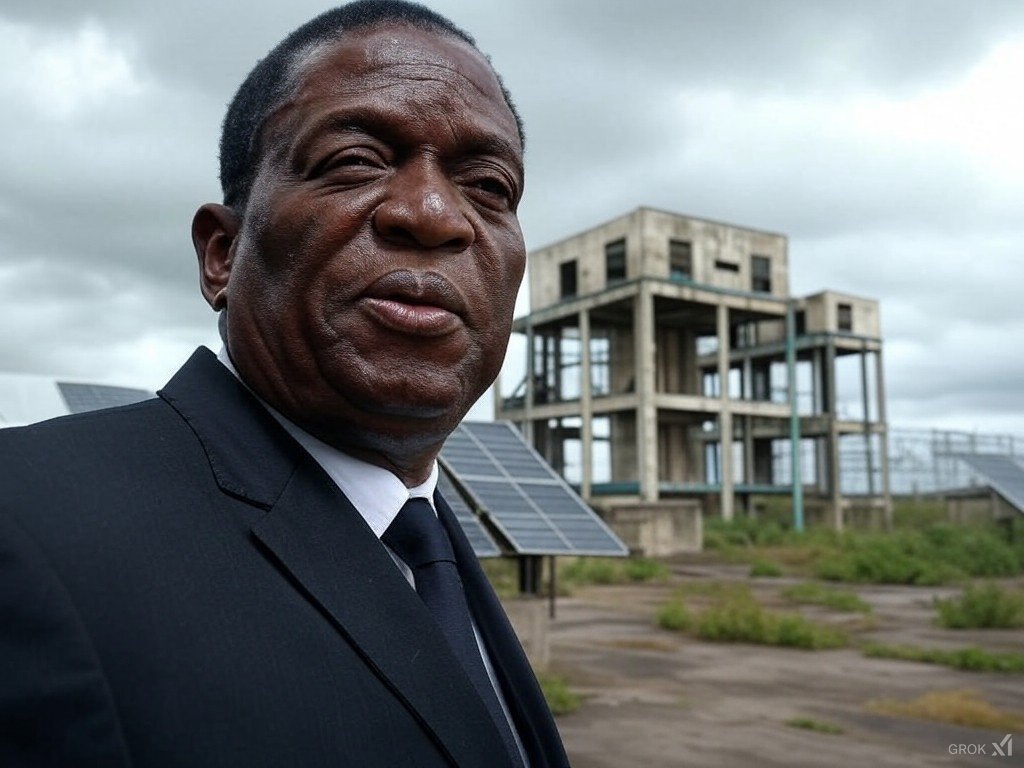 In late 2024, Zimbabwe faced a profound constitutional crisis as President(?) Emmerson Dambudzo Mnangagwa sought to extend his tenure beyond the constitutionally mandated two-term limit, aiming to remain in power until 2030. This move starkly contravenes the nation's constitution, which unequivocally restricts any individual to a maximum of two five-year terms as president. The populace had anticipated the conclusion of Mnangagwa's rule in 2028, placing their faith in constitutional governance.
However, it appears that the current administration is intent on manipulating the law to serve its own avaricious ambitions.
Mnangagwa's political trajectory is deeply entwined with the malfeasance within ZANU-PF. Serving as a close advisor to Robert Mugabe, he held various influential positions, including roles in foreign affairs, trade and commerce, judiciary services, and the secret service. The latter was notoriously employed to suppress dissent, leading to widespread human rights abuses. From the 1980s to the present, political violence has been a grim constant, with countless individuals subjected to torture, disfigurement, and extrajudicial killings.
This pervasive climate of fear and repression has compelled hundreds of thousands of Zimbabweans to flee their homeland, seeking refuge from persecution and potential death. For many, this marks the beginning of an interminable suffering, rendering the prospect of returning to the land they once cherished increasingly remote.
As a former regional board member of ZimRights in Bulawayo, I have tirelessly advocated for justice and an end to political violence and inhumane treatment of regime opponents. This activism has made me a target of the ZANU-PF government, extinguishing any hope I might have had of returning to Zimbabwe.
Beyond the political turmoil, the nation's public services have deteriorated precipitously under ZANU-PF's misrule. The healthcare system is virtually non-existent, a dire situation exacerbated by the cessation of life-saving medications previously supplied by USAID. Basic services such as electricity, water, and transportation have become increasingly unreliable, with conditions worsening daily.
How much longer will this regime be permitted to decimate the remnants of Zimbabwe's infrastructure and social services?
No Way 2030
- Details
- Written by: DeepSeek, John Burke, Josephine Jenje and Lloyd Shumbayaonda
- Category: Zimbabwe
- Hits: 1144
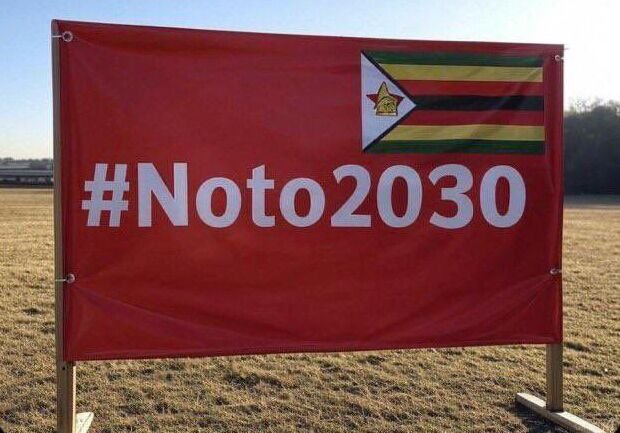 Do Not Breach the Constitution for ED Mnangagwa
The beginnings of our article regarding the false "modesty" of E D Mnangagwa and his claims of "It's what the membership {of Zanu PF} want me to do"!! Also see the research on the "Identity Politics" of Corrupt Governments CLICK HERE
Assisted by DeepSeek via perplexity.ai Using non Chinese Servers
"Why is Zimbabwe's Government so corrupt and intent upon looting the nation?"
Zimbabwe's government has long been accused of widespread corruption and looting of national resources, contradicting official narratives that often blame economic challenges on external factors like sanctions.[1] The reasons for this entrenched corruption are complex and multifaceted:
Under President Mnangagwa's leadership, Zimbabwe has become the most corrupt nation in the SADC region, as opposition CCC say no to 2030 "vision". Zimbabweans cannot continue suffering under the same government, with same man who used to be an 'enforcer' of former late president Robert Mugabe.
1. Lack of accountability
Zimbabwe's Prosecutor General recently estimated that the country is losing $1.8 billion annually due to corruption, describing it as a major barrier to economic recovery. This massive sum bleeds the economy of revenue meant for sustainable development and improving citizens' lives.[1] The lack of strong prosecution systems for corruption cases allows this to continue largely unchecked.[3]
2. Patronage networks
Corruption has become institutionalized within Zimbabwean social systems, creating a patronage system where allegiance to leadership is rewarded with immunity from prosecution. This has normalized corrupt practices across many levels of society and government.[3]
3. Exploitation of natural resources
The president has been accused of enriching himself through gold and diamond smuggling networks and using his power to protect criminals facilitating these illicit markets.[4] Former officials have claimed that even when presented with evidence of diamond revenue looting, top leadership refused to act, dismissing concerns.[5]
37 Years Ago - The Unity Accord
- Details
- Written by: AI and Cannicious Nkala ZAPU Europe Province Secretary for Administration
- Category: Human Rights Violations
- Hits: 1186
 Question META AI - after some probing, compiled this article from all available web sources {including ZAPU's own material}
The Gukurahundi Genocide was a series of massacres and forced disappearances that occurred in Zimbabwe, particularly in the Matabeleland region, between 1982 and 1987. The term "Gukurahundi" is derived from the Shona language and means "the early rain which washes away the chaff before the spring rains".
Where:
The Gukurahundi Genocide primarily took place in the Matabeleland region of Zimbabwe, which is predominantly inhabited by the Ndebele people. The massacres and forced disappearances occurred in rural areas, towns, and cities, including Bulawayo, the second-largest city in Zimbabwe.
Page 8 of 18